

Panini Blockchain is one of the most important digital collectible platforms for sports card collectors who want to explore NFT trading cards in 2026. As sports collecting moves beyond physical cards, Panini has created a marketplace where fans can buy, sell, store, and collect officially licensed digital sports cards.
For decades, Panini has been known for physical trading cards, stickers, and sports collectibles. Now, through Panini Blockchain, the company offers digital trading cards connected to blockchain technology. These cards can represent athletes, teams, special moments, limited-edition releases, and premium collectible designs.
In 2026, interest in sports NFT trading cards is growing again because collectors want proof of ownership, limited supply, digital rarity, marketplace access, and easier online trading. Panini has also expanded its blockchain features by introducing an Ethereum bridge that allows select digital collectible cards to move from Panini wallets to self-custody wallets and OpenSea.
This complete guide explains what Panini Blockchain is, how it works, how collectors use it, the benefits, risks, fees, investment value, wallet safety, and what beginners should know before buying Panini NFT trading cards.
What Is Panini Blockchain?
Panini Blockchain is Panini America’s digital collectibles platform, where users can collect sports NFT trading cards. These cards are digital assets that can be bought, sold, and stored online.
Unlike a normal image file, a blockchain-based trading card is designed to have a unique ownership record. This helps collectors verify scarcity, ownership history, and authenticity. Panini’s NFT marketplace promotes officially licensed digital sports collectibles from major sports categories, including football, basketball, college sports, FIFA, LaLiga, WNBA, NASCAR, NWSL, and other sports collections.
In simple words, Panini Blockchain gives collectors a digital version of the sports card hobby. Instead of keeping cards in binders, sleeves, or graded cases, collectors can store and trade digital cards through an online marketplace.
NFT Market Data and Sports Collectibles Trend
The NFT market has changed a lot since the 2021 hype cycle. Trading activity became more volatile after 2022, but digital collectibles did not disappear. Instead, the market became more selective, with stronger interest in recognizable brands, gaming assets, art, and sports-related collectibles.
Sports NFTs remain a niche but loyal part of the digital collectibles market. One market research estimate valued the sports NFT market at about $1.5 billion in 2024 and projected possible growth toward $8 billion by 2032, showing that sports collectibles still have long-term demand potential.
| Year | NFT Market Trend |
| 2021 | Explosive growth and mainstream hype |
| 2022 | Market correction and sharp decline in trading volume |
| 2023 | Stabilization with reduced speculation |
| 2024 | Selective recovery focused on strong brands |
| 2025–2026 | Niche growth in sports NFTs, gaming NFTs, and utility-based assets |
This matters for Panini Blockchain because collectors should understand that NFT demand is real, but it is also highly cyclical. Brand trust, official licensing, scarcity, and marketplace liquidity now matter more than hype alone.
Why Panini Blockchain Matters in 2026
Panini Blockchain matters because the sports card industry is changing. Collectors no longer focus only on physical cards. Many now look for digital ownership, online marketplaces, limited NFT drops, athlete-based collectibles, and blockchain-verified scarcity.
In 2026, Panini Blockchain is especially important because Panini announced its Ethereum bridge. This bridge allows users to move select digital collectible cards from Panini wallets to self-custody wallets. Once moved, cards can be stored in a personal wallet and bought or sold on OpenSea.
This is a major update because earlier Panini blockchain assets were mainly connected to Panini’s closed platform. When Panini first announced blockchain trading cards in 2019, the company described a closed Panini platform where collectors could buy, sell, and store blockchain trading card assets.
The 2026 bridge gives collectors more flexibility, especially those who want stronger control over their digital assets.
How Panini Blockchain Sports NFT Trading Cards Work
Panini Blockchain trading cards work through digital collectible ownership. A collector may buy a digital pack, an auction item, or a marketplace card. The card is then stored inside the user’s Panini account or wallet.
Each card may include details such as:
- Athlete name
- Team or league
- Card design
- Serial number
- Edition size
- Collection name
- Rarity level
- Transaction history
- Ownership record
Some Panini Blockchain cards may be limited editions, while others may be part of special releases, sports moments, or premium drops.
The main idea is simple: collectors can own a digital sports card that is not just a screenshot or image. It is connected to blockchain technology, which helps prove ownership and scarcity.
Real-World Example of a Panini NFT Card
A Panini Blockchain NFT card may be a limited-edition rookie card of a popular athlete. For example, a card could have a serial number such as #7/99 or #3/10, meaning only a small number of those digital cards exist.
If the card features a rising player, strong design, low serial number, or special edition release, collectors may show more interest. The card may be sold through auction, fixed-price listing, or marketplace resale.
However, demand can change quickly. If the athlete performs well, collector interest may increase. If the market slows down or the player loses popularity, the card value may drop. This is why buyers should research before purchasing any Panini Blockchain NFT card.
Collector Journey Example
A typical Panini Blockchain collector journey may look like this:
- A collector signs up on the Panini NFT marketplace.
- They buy a digital pack during a pack drop.
- They open the pack and receive several digital cards.
- They check card rarity, serial number, athlete demand, and recent marketplace activity.
- They hold the card, list it for resale, or trade it later.
- If the card is eligible, they may bridge it to Ethereum.
- After bridging, they may store it in a self-custody wallet or list it on OpenSea.
This journey shows how Panini Blockchain connects traditional card collecting with NFT ownership, digital wallets, and public marketplace trading.
Panini Blockchain and the Ethereum Bridge
One of the biggest developments for Panini Blockchain in 2026 is the Ethereum bridge.
Panini announced that the bridge would allow customers to move digital collectible cards from Panini wallets to self-custody wallets. These cards can then be stored in a collector’s wallet and traded on OpenSea.
This matters because self-custody gives collectors more control. Instead of keeping all digital cards only inside Panini’s platform, eligible cards can exist as Ethereum assets. OpenSea also describes the Panini Bridge as a way for collectors to optionally bridge select cards to the Ethereum Mainnet, where they can be viewed and traded across a public marketplace.
However, collectors should understand that not every asset may be bridgeable. Some sources note that unsealed digital packs cannot be transferred outside the Panini Blockchain platform, so users should always read Panini’s official rules before moving cards.
How to Store Panini NFTs Safely
Panini Blockchain users may store their digital collectibles in two main ways: custodial storage and self-custody storage.
Custodial Storage
Custodial storage means the card stays inside your Panini account or Panini wallet. This is easier for beginners because users do not need to manage private keys or seed phrases.
Self-Custody Wallet
Self-custody means the collector controls the wallet directly. Examples of crypto wallets include MetaMask and Trust Wallet. This gives users more control, but it also creates more responsibility.
If you use a self-custody wallet, never share your seed phrase, private key, or wallet recovery words. If you lose access, the asset may be impossible to recover.
| Storage Type | Best For | Main Benefit | Main Risk |
| Panini account/wallet | Beginners | Easier to use | Depends on platform access |
| Self-custody wallet | Experienced NFT users | More personal control | Lost seed phrase can mean permanent loss |
| OpenSea-connected wallet | Active traders | Wider marketplace access | Higher scam and phishing risk |
Main Features of Panini Blockchain
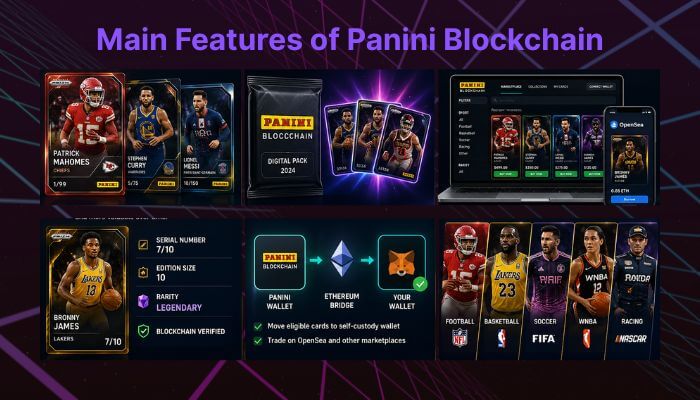
Panini Blockchain is a digital collectibles platform focused on licensed sports NFTs, offering collectors a mix of authenticity, scarcity, and blockchain-based ownership. Unlike generic NFT platforms, Panini Blockchain emphasizes officially licensed content, making it attractive to sports fans and collectors who value verified digital assets.
1. Official Sports Digital Collectibles
Panini Blockchain specializes in officially licensed digital sports collectibles, including athlete cards and league-approved content. This ensures authenticity, brand credibility, and long-term collectible value. For many users, Panini Blockchain stands out because it connects digital ownership with real-world sports licensing.
2. Digital Pack Drops
Panini Blockchain offers digital pack drops where users can purchase packs and reveal NFT cards, similar to opening physical trading cards. This feature adds excitement and unpredictability, making the collecting experience more engaging and interactive.
3. Marketplace Buying and Selling
Users can buy and sell digital collectibles directly within the Panini Blockchain marketplace. Additionally, through Ethereum integration, certain assets may be transferred or traded on external platforms like OpenSea, increasing liquidity and market exposure.
4. Limited Editions and Scarcity
Scarcity plays a major role in value. Panini Blockchain releases limited-edition NFTs, where rarity, player popularity, and demand influence pricing. Collectors often seek low-supply cards, which can increase desirability and potential resale value over time.
5. Self-Custody Option
Panini Blockchain allows eligible NFTs to be transferred to self-custody wallets through blockchain bridges. This gives users greater control over their assets, aligning with Web3 principles of ownership and decentralization.
6. Cross-Sport Collecting
Panini Blockchain supports multiple sports categories, allowing collectors to explore different leagues and athletes in one platform. This diversity enhances user engagement and expands the collectible ecosystem beyond a single sport.
Platform Behavior Insight
Panini Blockchain works like a digital collectibles marketplace, but its behavior is strongly influenced by scarcity and demand.
Limited pack drops can create urgency because collectors may not know exactly which cards they will receive. This is similar to physical card packs, where rarity and surprise drive interest.
Secondary market pricing depends on supply, athlete popularity, edition size, collector demand, and market timing. A card may sell quickly when an athlete is trending, but the same card may lose attention when demand slows.
This means collectors should not only look at rarity. They should also study marketplace activity, recent sales, listing volume, and whether buyers are actively purchasing similar cards.
How Panini Blockchain Makes Money
Panini Blockchain can generate revenue in several ways. The main income sources may include digital pack sales, premium NFT drops, marketplace transaction fees, limited-edition collections, and licensing partnerships with leagues and athletes.
| Revenue Source | How It Works |
| Digital pack sales | Collectors buy NFT packs directly from Panini |
| Premium drops | Limited releases can create high collector demand |
| Marketplace fees | Fees may apply when users buy or sell cards |
| Limited collections | Scarce editions can attract higher demand |
| Licensing partnerships | Sports rights help create official collectibles |
This business model is similar to the traditional sports card industry but adapted for digital ownership and online trading.
Benefits of Panini Blockchain for Collectors
Digital Ownership: Panini Blockchain allows collectors to own digital trading cards with blockchain-backed records. This helps separate real digital collectibles from ordinary images.
Easy Online Trading: Collectors can buy and sell cards without shipping, grading delays, or physical storage problems.
Access to Rare Drops: Some Panini Blockchain cards may be released in limited quantities, which can create collector demand.
Athlete and Team Collecting: Fans can collect favorite players, rookies, teams, leagues, or sports moments in digital form.
Stronger Marketplace Flexibility: The 2026 Ethereum bridge adds more flexibility by allowing eligible cards to move beyond Panini’s own wallet system.
Is Panini Blockchain a Good Investment?
Panini Blockchain may be interesting for collectors, but it should not be treated as a guaranteed investment. Sports NFT trading cards are speculative digital assets, and their value can rise or fall quickly.
A card’s value may depend on athlete popularity, rarity, serial number, edition size, market demand, and overall NFT interest. Some collectors may make profits, but others may lose money.
The safest approach is to treat Panini Blockchain as a collecting platform first and an investment opportunity second. Buy cards you genuinely like, research before spending, and avoid using money you cannot afford to lose.
Advanced Risks of Panini Blockchain
While Panini Blockchain offers licensed digital sports collectibles, it also carries several advanced risks that collectors should understand before investing. Like most NFT platforms, Panini Blockchain operates within a fast-changing digital asset market where value depends on demand, platform stability, and broader NFT trends.
1. Liquidity Risk
Liquidity refers to how easily a digital collectible can be sold. On Panini Blockchain, a card may appear valuable due to rarity, but without active buyers, it may be difficult to sell at the expected price. Low marketplace activity or limited demand can significantly reduce real resale value.
2. Platform Dependency Risk
Panini Blockchain collectibles are closely tied to the platform’s ecosystem. If the platform changes policies, reduces features, limits trading options, or loses user engagement, collectors may face reduced utility and value. This dependency makes long-term value partially reliant on the platform’s success.
3. Licensing Risk
Panini Blockchain relies on official licensing agreements with leagues, teams, and athletes. If these agreements change, expire, or are not renewed, it could impact the availability and desirability of certain collectibles. Licensing shifts can directly influence long-term demand and market confidence.
4. Market Cycle Risk
NFT markets often move through hype cycles. Panini Blockchain collectibles may increase in value during periods of strong demand but can also decline rapidly when market interest drops. These fluctuations are common in the NFT space and can affect both short-term and long-term pricing.
5. Project Continuity Risk
The long-term success of Panini Blockchain depends on continuous platform development, user engagement, and ecosystem growth. Some NFT projects in the sports industry have lost value after initial hype faded. For example, the Australian Open NFT project reportedly declined after reduced platform activity, highlighting the importance of sustained support and utility.
Risks of Panini Blockchain NFT Trading Cards
Panini Blockchain has benefits, but collectors should also understand the risks.
- NFT Prices Can Be Volatile: Sports NFT trading cards can rise or fall in value quickly. A card that seems valuable today may lose demand later.
- Not Every Card Will Increase in Value: Collectors should not assume every Panini Blockchain card will become profitable. Value depends on athlete popularity, rarity, demand, edition size, marketplace trends, and long-term collector interest.
- Wallet Safety Is Important: If users move cards to self-custody wallets, they become responsible for wallet security. Losing a seed phrase or falling for a phishing scam can cause permanent loss.
- Platform Rules May Change: Panini Blockchain features, fees, transfer rules, and marketplace access may change over time. Collectors should check official Panini updates before buying or selling.
- Licensing Can Affect the Hobby: The sports card industry is competitive, and licensing changes can affect which companies produce official cards for different leagues. This can influence long-term collector demand.
How to Buy Panini Blockchain Cards
Here is a simple beginner-friendly process:
- Visit the official Panini NFT marketplace.
- Create or sign in to your Panini account.
- Browse available digital cards, packs, auctions, or marketplace listings.
- Review the card details, rarity, edition size, and price.
- Buy only from official or verified sources.
- Store the card in your Panini wallet or an eligible connected wallet.
- Track card value and marketplace activity over time.
Beginners should avoid rushing into expensive purchases. Start with a small budget and learn how the marketplace works first.
Beginner Mistakes to Avoid
New collectors should avoid common mistakes when using Panini Blockchain.
- Do not buy a card only because it is trending. Hype can fade quickly, and prices may drop after a short period. Always research the athlete, edition size, rarity, and recent sales before buying.
- Do not ignore serial numbers and edition size. A card numbered #1/10 may have a different collector appeal than a card numbered #78/999.
- Do not click fake links from social media, Telegram, Discord, or random websites. Always use official Panini pages and verified marketplace collections.
- Do not assume every card can be bridged to Ethereum. Check bridge eligibility before buying if self-custody is important to you.
- Do not overspend early. Beginners should start small and learn how the marketplace works before buying expensive cards.
How to Sell Panini Blockchain Cards
Collectors can usually sell Panini Blockchain cards through the platform marketplace. Eligible Ethereum-bridged cards may also be sold on OpenSea.
Before selling, check:
- Current floor price
- Recent sales history
- Athlete popularity
- Card rarity
- Serial number
- Marketplace fees
- Bridge eligibility
- Wallet transaction costs
A rare card does not always mean a fast sale. The best price depends on demand from real collectors.
Panini Blockchain Fees Explained
Before buying or selling Panini Blockchain cards, collectors should understand possible fees.
Marketplace selling fees may apply when a card is sold through Panini’s platform or another NFT marketplace. Auction fees may also apply depending on how the listing is created.
If a collector moves an eligible card to Ethereum, gas fees may apply. Gas fees are blockchain transaction costs, and they can change depending on network activity.
There may also be withdrawal, transfer, or marketplace service costs depending on the platform and transaction type. Because fees can change, collectors should always check the latest fee details before buying, selling, or transferring Panini Blockchain cards.
Panini Blockchain vs Physical Sports Cards
Panini Blockchain and physical sports cards are different, but both can appeal to collectors.
| Factor | Panini Blockchain Cards | Physical Sports Cards |
| Format | Digital NFT collectible | Printed physical card |
| Storage | Online account or crypto wallet | Binder, slab, case, or vault |
| Trading | Online marketplace | In-person, online, auction houses |
| Condition issues | No physical wear | Condition and grading matter |
| Ownership proof | Blockchain record | Receipt, grading, provenance |
| Main appeal | Digital ownership and fast trading | Tangibility and traditional collecting |
The best collectors may use both. Physical cards offer tradition, while Panini Blockchain offers digital ownership and modern trading.
Panini Blockchain vs Other NFT Platforms
Panini Blockchain is different from other NFT platforms because it focuses strongly on officially licensed sports digital collectibles.
| Feature | Panini Blockchain | NBA Top Shot | Sorare | OpenSea |
| Main Focus | Sports trading cards | Basketball digital moments | Fantasy sports NFTs | Broad NFT marketplace |
| Main Utility | Collecting and trading | Collecting | Fantasy gameplay | Buying and selling NFTs |
| Audience | Sports card collectors | NBA fans | Fantasy sports users | General NFT users |
| Marketplace Style | Panini-focused marketplace | Platform-specific marketplace | Fantasy sports ecosystem | Open marketplace |
| Liquidity | Medium, depends on release demand | Medium–High in the NBA niche | Medium, utility-driven | High, broad marketplace reach |
| Best For | Card-style sports NFT collectors | Basketball moment collectors | Fantasy sports players | NFT traders and collectors |
NBA Top Shot may have stronger brand recognition among basketball NFT collectors, while Panini Blockchain may appeal more to traditional sports card collectors who prefer card-style digital collectibles.
Sorare has stronger utility because cards can be used in fantasy contests, while Panini Blockchain is more collectible-driven.
OpenSea is broader because it supports many NFT collections across different categories. With the Ethereum bridge, some Panini digital collectibles may also become available on OpenSea, giving them access to a wider NFT marketplace.
Which Platform Has Better Liquidity?
Liquidity depends on active buyers, marketplace traffic, collection demand, and how easy it is to resell an asset.
OpenSea generally has a broader NFT marketplace reach because it supports many collections across different categories. Panini Blockchain is more specialized, so liquidity may depend more on sports card collectors and demand for specific Panini releases.
Sorare may have stronger utility-based demand because cards can be used in fantasy sports competitions. NBA Top Shot may have stronger basketball-specific recognition.
For Panini Blockchain, the Ethereum bridge may improve liquidity because eligible cards can reach OpenSea buyers, but it does not guarantee every card will sell quickly.
Is Panini Blockchain Safe?
Panini Blockchain can be safe when users follow proper security steps and use official sources. The biggest risks usually come from scams, fake links, phishing websites, weak passwords, and unsafe wallet behavior.
Safety tips:
- Use only official Panini websites and verified marketplace pages.
- Never share your wallet seed phrase.
- Turn on account security features when available.
- Double-check URLs before logging in.
- Avoid unknown Discord, Telegram, or social media links.
- Research the card value before buying.
- Do not invest money you cannot afford to lose.
For collectors using OpenSea, always verify the official Panini collection before buying bridged cards.
Tax and Legal Considerations in 2026
Collectors should understand that NFTs may have tax or legal rules depending on their country. In many places, profits from selling digital assets may be taxable.
If a collector buys a Panini Blockchain card and later sells it for a profit, that profit may need to be reported. Rules may vary depending on whether the asset is treated as a collectible, digital asset, capital asset, or business income.
NFT regulations are still developing in many countries. Collectors should keep records of purchases, sales, fees, wallet transactions, and marketplace activity. For serious buying or selling, it is better to speak with a qualified tax professional.
Who Should Use Panini Blockchain?
Panini Blockchain may be suitable for:
- Sports card collectors
- NFT collectors
- Fans of football, basketball, soccer, racing, and women’s sports
- Collectors interested in digital ownership
- Buyers who understand marketplace risk
- Experienced users are comfortable with crypto wallets
It may not be suitable for:
- People are expecting a guaranteed profit
- Beginners who do not understand NFTs
- Users who cannot manage wallet security
- Collectors who prefer only physical cards
- Buyers who do not want price volatility
Panini Blockchain SEO Collector Checklist
Before buying a Panini Blockchain sports NFT trading card, check these important points:
- Is the card officially listed?
- Is the collection verified?
- What is the edition size?
- Is the player popular?
- Is it a rookie, special edition, or limited release?
- What are recent sales prices?
- Can the card be bridged to Ethereum?
- Are there extra marketplace or gas fees?
- Is the seller reliable?
- Are you buying for collecting or investment?
This checklist helps reduce risk and improve your decision-making.
Future of Panini Blockchain in 2026 and Beyond
The future of Panini Blockchain depends on collector adoption, sports licensing, marketplace trust, blockchain usability, and demand for digital sports cards.
The Ethereum bridge is a major step because it gives collectors more control and creates a stronger connection between Panini’s digital collectibles and the wider NFT market. Panini’s partnership activity also shows that digital collectibles remain part of its sports strategy. For example, the NWSL and NWSLPA announced a multi-year partnership with Panini that includes trading cards, digital collectibles on Panini’s blockchain, and an official sticker collection.
As digital collecting becomes more mainstream, Panini Blockchain could become more useful for fans who want officially licensed sports collectibles that are easy to trade, store, and verify online.
Panini Blockchain Glossary
- NFT: An NFT is a non-fungible token. It is a unique digital asset that can represent ownership of a collectible, artwork, card, or digital item.
- Blockchain: Blockchain is a digital record system that stores transaction information. In NFT collecting, it helps verify ownership and transaction history.
- Gas Fees: Gas fees are transaction costs paid when using some blockchain networks, such as Ethereum.
- Wallet: A wallet is a tool used to store digital assets. It may be custodial, like a platform account, or self-custody, like MetaMask or Trust Wallet.
- Floor Price: Floor price means the lowest listed price for an NFT in a collection.
- Minting: Minting is the process of creating a new NFT on a blockchain.
- Bridge: A bridge allows a digital asset to move from one blockchain or platform environment to another.
Pros and Cons of Panini Blockchain
| Pros | Cons |
| Official licensed sports NFTs | NFT prices can be volatile |
| Easy online trading | Liquidity may be limited |
| Limited-edition scarcity | Not all cards increase in value |
| Ethereum bridge adds flexibility | Platform dependency risk |
| No physical storage needed | Requires NFT and wallet knowledge |
| Appeals to modern sports collectors | Gas fees may apply after bridging |
Conclusion
Panini Blockchain is a major platform for sports NFT trading cards in 2026. It combines Panini America’s long history in sports collectibles with modern blockchain technology, digital ownership, NFT marketplaces, and limited-edition sports cards.
For collectors, the biggest advantages are authenticity, digital scarcity, easy online trading, and access to officially licensed sports collectibles. The Ethereum bridge also makes Panini Blockchain more flexible by allowing eligible cards to move to self-custody wallets and OpenSea.
However, collectors should be careful. NFT trading cards can be risky, prices can change quickly, liquidity can be low, fees may apply, and wallet safety is very important. The best approach is to research every card, buy from official sources, understand the risks, and collect within a safe budget.
In 2026, Panini Blockchain is not just a digital card marketplace. It is part of the future of sports collecting, where physical cards, NFT trading cards, digital ownership, and fan engagement continue to merge.
Panini Blockchain (FAQs)
1. How does Panini Blockchain ensure the authenticity of digital trading cards?
A. Panini Blockchain uses blockchain technology to create a verifiable ownership record for each digital card. This helps ensure that every NFT card is unique, cannot be duplicated, and can be tracked through its transaction history.
2. Can Panini Blockchain cards be transferred between different wallets?
A. Yes, Panini Blockchain allows certain eligible cards to be transferred using its Ethereum bridge. Once bridged, these cards can be moved to compatible wallets and traded on external platforms like OpenSea.
3. What makes Panini Blockchain different from traditional NFT marketplaces?
A. Panini Blockchain focuses specifically on officially licensed sports trading cards, while general NFT marketplaces offer a wide range of digital assets. This niche focus gives Panini stronger credibility among sports collectors.
4. Are Panini Blockchain NFT packs randomly generated?
A. Yes, most Panini Blockchain digital packs are randomly generated, similar to physical trading card packs. This randomness creates excitement and rarity, as collectors do not know which cards they will receive.
5. How often does Panini Blockchain release new NFT collections?
A. Panini Blockchain releases new NFT collections periodically through pack drops, special events, and limited-edition launches. The frequency may vary depending on sports seasons, licensing, and promotional campaigns.
6. Can Panini Blockchain NFTs lose access if the platform shuts down?
A. Like many digital platforms, Panini Blockchain assets may depend on platform infrastructure. However, the Ethereum bridge helps reduce this risk by allowing eligible NFTs to move to decentralized environments.
7. What factors influence the value of Panini Blockchain cards?
A. The value of Panini Blockchain cards depends on several factors, including player popularity, rarity, edition size, serial number, market demand, and overall NFT market trends.
Disclaimer: This article about Panini Blockchain is for general informational purposes only. It aims to explain how the platform works and how digital sports collectibles are used. This content is not officially associated with Panini America. Readers are encouraged to explore the platform independently for more details.
